Live Online • Instructor-Led • Limited Seats Available

Course Details
Duration: 38 hours
Delivery Options:
Full-Time: Intensive weekday format (9:00 AM -5:00)
Part-Time: Weekend format (Saturday & Sunday, 9:00 AM – 5:00 PM)
Private One-on-One: Flexible scheduling based on student and instructor availability
Location: Live Online (Microsoft Teams)
Limited seats available. Early registration is recommended.
Dementia Care Foundation
Live, Instructor-Led | Ongoing Enrolment
Flexible scheduling options available
Course Overview
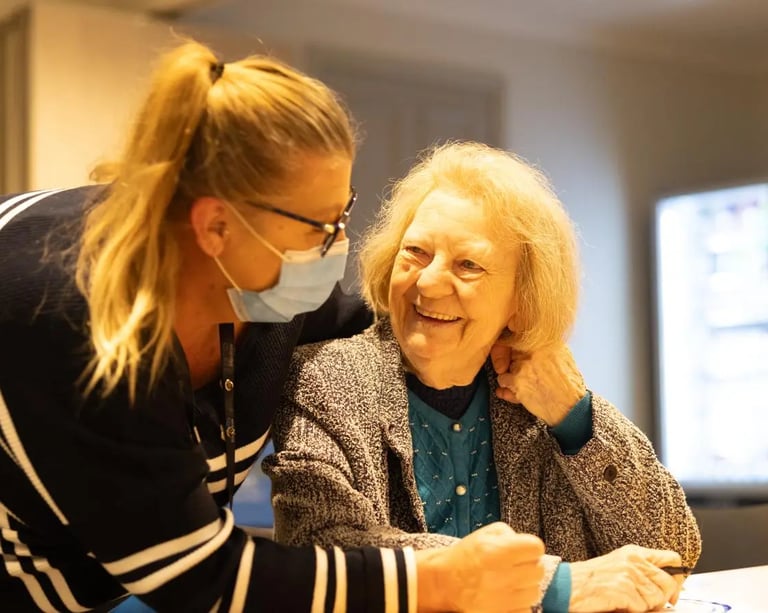
Dementia Care Foundations is an immersive, instructor‑led course designed to help learners understand dementia with clarity, confidence, and compassion. Dementia affects how a person thinks, communicates, behaves, and experiences the world — and it also profoundly affects the people who love and support them.
This course goes far beyond definitions and symptoms. It brings together evidence‑informed practice, real caregiving insight, and the human side of dementia — the part that textbooks rarely capture.
Learners explore how dementia changes the brain, how to interpret behavioural expressions, how to communicate effectively, and how to support daily activities with dignity and respect. The course also integrates Indigenous perspectives, trauma‑informed approaches, and culturally safe care practices.
This course is taught live by an experienced nurse educator with extensive experience teaching dementia care in British Columbia. Every session includes real stories, real examples, and meaningful human connection.
Learners consistently describe this course as transformative because it helps them understand not only what dementia is, but who the person is behind the diagnosis.
This course is ideal for family caregivers, individuals supporting loved ones, community helpers, and anyone preparing for future caregiving roles.
No previous healthcare experience is required.
This is a non‑vocational short course.
Course Snapshop
Course Title: Dementia Care Foundations
Course Code: SCC-DCF 101
Total Hours: 38
Delivery: Live instructor-led (online)
Credential: Statement of Completion
Course Type: Non-vocational short course (PTIB-Exempt)
What You Will Learn
By the end of this course, you will be able to:
Recognize early signs and types of dementia, including Alzheimer’s, vascular dementia, Lewy body dementia, and other neurocognitive disorders.
Understand the stages of dementia and how cognitive changes affect memory, judgment, communication, and independence.
Apply non‑pharmacological communication strategies such as validation, redirection, and de‑escalation.
Support daily care routines (bathing, grooming, meals, mobility) in ways that reduce resistance and promote dignity.
Identify triggers behind behavioural expressions such as wandering, repetitive questions, sundowning, and agitation.
Interpret behavioural expressions as unmet needs rather than “problems.”
Create safe, supportive home and community environments.
Support brain‑healthy routines, meaningful activities, and cognitive engagement.
Navigate care‑related decisions, including safety planning and long‑term support options.
Build resilience and prevent caregiver burnout through emotional regulation and self‑care strategies.
Why This Course Is Different
You may notice confusion, memory loss, or changes in behaviour, and suddenly everyday interactions become challenging.
You might feel frustrated.
You might feel unsure of what to do.
You might worry about saying or doing the wrong thing.
But behind every behaviour is a person who still needs understanding, patience, and connection.
This course helps you understand what’s really happening — and how to respond in ways that reduce stress, build trust, and support dignity.
You will learn practical strategies that make a real difference, whether you are supporting a loved one or preparing for a future in caregiving.
Because dementia care is not just about managing symptoms —it’s about understanding the person.
Course Modules (38 Hours)
Module 1: Foundations of Dementia & Cognitive Changes
Module 2: Understanding Dementia in Daily Life
Module 3: Stages, Progression & Observation
Module 4: Communication & Person‑Centred Care
Module 5: Responsive Behaviours (BPSD) & Indigenous Perspectives
Module 6: Safety, De‑Escalation & Abuse Prevention
Module 7: ADLs, Environment & Therapeutic Approaches
Course Topics
1) Foundations of Dementia and Cognitive Changes
This module gently introduces learners to what dementia actually is — not just the medical definition, but what it means for a person’s daily life.
Learners will understand:
What dementia is: a group of conditions that affect the brain and gradually change how a person thinks, remembers, and communicates.
How dementia is different from normal aging: forgetting where you put your keys is normal; forgetting what keys are used for is not.
Dementia vs delirium: delirium comes on suddenly (often from infection or dehydration) and can be reversed; dementia is gradual and progressive.
Reversible causes of confusion: infections, medication side effects, dehydration, vitamin deficiencies — and why these must be ruled out.
How dementia affects the brain: which areas control memory, language, judgment, and behaviour — and what happens when these areas change.
Early signs and symptoms: repeating questions, getting lost, personality changes, difficulty with planning, and changes in judgment.
Goals of care: safety, dignity, independence, and emotional well‑being.
This module builds the foundation for everything else.
Learners leave with a clear, confident understanding of what dementia actually is.
2) Understanding Dementia
This module explains how dementia affects a person’s everyday functioning — in ways that are often confusing or misunderstood.
Learners will understand:
Types of dementia:
Alzheimer’s disease (memory‑focused)
Vascular dementia (blood flow‑related changes)
Lewy body dementia (movement + hallucinations)
Frontotemporal dementia (behaviour + personality changes)
How dementia affects thinking: difficulty planning, organizing, or following steps.
How dementia affects communication: trouble finding words, understanding instructions, or expressing needs.
How dementia affects emotions: fear, frustration, sadness, or withdrawal.
How dementia affects relationships: role changes, stress, and misunderstandings.
How dementia affects independence: challenges with cooking, bathing, dressing, and managing medications.
This module helps learners see dementia through the eyes of the person living with it — with empathy and clarity.
3) Stages, Progression, and Observation
This module teaches learners how dementia changes over time and how to recognize what stage a person may be in.
Learners will understand:
Early stage: mild memory loss, repeating questions, getting lost, difficulty managing finances.
Middle stage: increased confusion, sleep changes, wandering, difficulty with daily tasks.
Late stage: limited communication, full assistance with ADLs, increased vulnerability.
Behavioural and psychological symptoms (BPSD): agitation, hallucinations, pacing, calling out, resistance to care.
Why behaviours happen: unmet needs, fear, pain, confusion, overstimulation, loneliness.
How to observe patterns:
When does the behaviour happen?
What happened right before?
What helped or made it worse?
Case example: “A Day in the Life”: a realistic scenario showing how dementia affects a full day.
This module teaches learners to see the meaning behind behaviours — not just the behaviour itself.
4) Communication and Person-Centred Care
This module gives learners practical communication tools that reduce stress and build trust.
Learners will understand:
Why communication becomes difficult: the brain struggles to process language, instructions, and complex information.
How to communicate clearly: short sentences, one step at a time, calm tone, gentle body language.
Validation: acknowledging feelings instead of correcting facts (“You miss your mother. Tell me about her.”).
Redirection: guiding attention to something comforting or familiar.
Avoiding elderspeak: no baby talk, no talking down, no “honey” or “sweetie” unless the person prefers it.
Supporting ADLs:
Bathing without resistance
Dressing with dignity
Eating with independence
Mobility with safety
Encouraging independence: offering choices, using cues, and supporting abilities rather than taking over.
This module gives learners the communication skills that make caregiving easier and more compassionate.
5) Responsive Behaviours (BPSD) and Cultural Safety
This module reframes “challenging behaviours” as expressions of unmet needs.
Learners will understand:
What responsive behaviours are: the person is responding to something — pain, fear, confusion, noise, hunger, loneliness.
Common behaviours: wandering, agitation, hallucinations, repetitive questions, calling out, resistance to care.
How to respond safely:
Stay calm
Give space
Use a soft voice
Offer reassurance
Remove triggers
Trauma‑informed care: understanding that past trauma can influence present behaviour.
Cultural safety: respecting traditions, communication styles, and personal identity.
Indigenous perspectives:
Holistic wellness
Community roles
Respect for Elders
Impacts of colonization and trauma
Importance of cultural continuity
This module teaches learners to see behaviour as communication — not as “problems.”
6) Safety, De-Escalation, and Abuse Prevention
This module focuses on keeping both the caregiver and the person safe.
Learners will understand:
How to recognize unsafe situations: wandering outside, kitchen hazards, falls, aggression, confusion in public places.
Environmental safety: lighting, clutter, noise, temperature, layout.
De‑escalation:
Stay calm
Lower your voice
Give space
Remove stressors
Offer comfort
Elder abuse awareness: what it is, how to recognize it, and how to report it.
Supporting families: helping them cope with stress, guilt, and exhaustion.
Caregiver burnout: signs, prevention, and support.
This module empowers learners to create safe, calm, supportive environments.
7) Daily Living Activities, Environment, and Therapeutic Approaches
This module brings everything together into practical caregiving strategies.
Learners will understand:
How to create a dementia‑friendly environment:
Clear pathways
Familiar objects
Calm lighting
Reduced noise
Safe kitchen and bathroom setups
Non‑pharmacological therapies:
Music therapy
Art and creative expression
Reminiscence therapy
Sensory activities
Supporting cognitive and physical activity: simple exercises, puzzles, routines.
Nutrition and hydration: how dementia affects appetite, taste, swallowing, and mealtime behaviour.
Technology supports: timers, labels, picture cues, simple apps.
End‑of‑life considerations: gentle introduction to late‑stage needs.
This module gives learners the hands‑on tools they need to support daily life with dignity and respect.
Instructional Method
This course is delivered through live, instructor‑led online sessions that include interactive discussions, case studies, scenario‑based learning, guided reflections, and practical demonstrations. Learners are encouraged to participate actively and explore approaches suitable for home and community caregiving environments.
Tuition & Payment Options
Total Tuition: $599
Option 1 – Standard Payment Plan
$150 deposit
$224.50 midway
$224.50 before final session
Option 2 – Bi-Weekly Plan
$150 deposit
$112.25 every two weeks (4 payments)
Option 3 – Full Payment
$599 at registration
Requirements
No prior healthcare experience required
Access to a device with internet
Willingness to participate
Who This Course Is For
This course is designed for family caregivers, individuals supporting loved ones in home or community environments, and anyone who wants to understand dementia more deeply and provide compassionate, informed support. It is not intended for regulated employment or professional certification pathways.
Policies
Attendance & Participation
Learners are expected to attend all live sessions and participate in discussions, case studies, and practical activities. Because this is an interactive, instructor‑led course, active engagement is essential for successful completion.
Technology Requirements
Participants must have access to a computer or mobile device with a stable internet connection, functioning audio, and the ability to use Microsoft Teams. Basic computer skills such as email, file access, and navigation are required.
Assessment & Completion
To receive a Statement of Completion, learners must complete all quizzes, activities, and the final knowledge check with a minimum grade of 65%.
Extensions may be granted at the instructorʼs discretion in exceptional circumstances.
Refunds
Refunds are available up to 7 days before the course start date. Deposits are non‑refundable but may be transferred to a future cohort once per learner. No refunds are issued after the course begins.
Code of Conduct
Seaside Coast College maintains a respectful, inclusive learning environment. Disruptive behaviour, harassment, or discriminatory language will not be tolerated. Learners are expected to treat peers, instructors, and course content with professionalism.
This course is classified as a non‑vocational short course and does not qualify learners for regulated employment. It is intended for personal development, caregiver education, and community learning..
This course is not designed to prepare students for employment in a specific occupation.


Course Details
Duration: 38 hours
Delivery Options:
Full-Time: Intensive weekday format (9:00 AM -5:00)
Part-Time: Weekend format (Saturday & Sunday, 9:00 AM – 5:00 PM)
Private One-on-One: Flexible scheduling based on student and instructor availability
Location: Live Online (Microsoft Teams)
Limited seats available. Early registration is recommended.
End-of-Life Care Foundations
Live, Instructor-Led | Ongoing Enrolment
Flexible scheduling options available
Course Overview
End-of-life care is one of the most meaningful and sensitive forms of support a person can provide.
End-of-life care is one of the most meaningful and sensitive forms of support a person can provide. During this stage of life, individuals and families often experience a range of physical, emotional, and spiritual changes, and the presence of a calm, informed, and compassionate caregiver can make a significant difference.
This course is designed to help learners feel more prepared and confident when supporting someone at end of life. It provides a clear and practical introduction to what may occur during the dying process, while emphasizing dignity, comfort, and respect for each individual’s unique experience.
Learners will explore how to respond to common situations that arise during end-of-life care, including changes in physical condition, emotional responses, and family dynamics. The course focuses on non-clinical, supportive approaches that can be applied in personal, community, or volunteer settings.
In addition to practical knowledge, this course recognizes the emotional impact of end-of-life care. Learners will be encouraged to reflect on their own understanding of death, dying, and grief, while developing strategies to remain present, supportive, and emotionally balanced.
Cultural and spiritual perspectives are integrated throughout the course, including Indigenous approaches to holistic care, community connection, and respect for traditions. This supports learners in providing care that is culturally safe, inclusive, and respectful of diverse beliefs and practices.
This course is suitable for individuals who are caring for a loved one, exploring caregiving roles, or simply wanting to feel more prepared to support others during end-of-life situations. No prior healthcare experience is required.
By the end of the course, learners will have a stronger understanding of how to provide compassionate, respectful, and supportive care within a non-clinical scope, and will feel more confident navigating the challenges and emotions that can arise during end-of-life experiences..
This is a non-vocational short course.
Course Snapshop
Course Title: End -of -Life Care Foundations
Course Code: SCC-DCF 101
Total Hours: 38
Delivery: Live instructor-led (online)
Credential: Statement of Completion
Course Type: Non-vocational short course (PTIB-Exempt)
Learning Outcomes
By the end of this course, you will be able to:
Understand the physical, emotional, and spiritual changes that may occur at end of life.
Recognize common signs of decline and know how to provide comfort‑focused, non‑clinical support.
Communicate with compassion, clarity, and emotional steadiness during difficult moments.
Support comfort measures such as positioning, environment, rest, and calm presence.
Apply culturally respectful and trauma‑informed approaches to end‑of‑life support.
Create a peaceful, safe, and person‑centred environment for individuals and families.
Navigate ethical considerations and maintain healthy personal boundaries.
Understand anticipatory grief and how it affects individuals, families, and caregivers.
Honour cultural and spiritual beliefs, rituals, and traditions related to death and bereavement.
Use self‑care strategies to stay grounded, emotionally balanced, and resilient.
Why This Course Is Different
You don’t get a second chance to provide good end‑of‑life care.
When someone is nearing the end of life, families often feel overwhelmed, unsure, and afraid of doing the wrong thing.
They don’t know what to expect.
They don’t know what to say.
They don’t know how to help.
And in those moments, what matters most is having someone who can bring calm, comfort, and presence.
This course helps you become that person.
You will learn how to support individuals with dignity, respond to difficult situations with confidence, and be there for families during one of the most important times in their lives.
Because end‑of‑life care is not just about what you do —it’s about how you show up.
Course Modules (38 Hours)
Module 1: Foundations of End‑of‑Life Care
Module 2: Physical Changes and Comfort Measures
Module 3: Communication and Family Support
Module 4: Cultural and Spiritual Perspectives
Module 5: Ethics, Boundaries, and Self‑Care
Module 6: After‑Death Care and Bereavement Support
Course Topics
1) Foundations of End‑of‑Life Care
This module introduces the principles of end‑of‑life care, focusing on dignity, comfort, and respect. Learners explore the role of caregivers and the importance of emotional presence.
What learners will understand:
What “end‑of‑life” means in a non‑clinical context
How to support comfort without medical interventions
How to be present without needing to “fix” anything
How to support emotional and spiritual needs
How to honour the person’s identity, history, and preferences
Real‑world examples:
Example 1: “He keeps asking if he’s dying.”
Learners practice responding gently without giving medical advice.
Example 2: “She doesn’t want to talk about death.”
Learners learn how to follow the person’s lead and respect boundaries.
Example 3: “The family is in denial.”
Learners understand how to support families without judgment.
2) Physical Changes and Comfort Measures
Learners gain a clear understanding of the physical changes that may occur near the end of life and how to support comfort in a non‑clinical way.
What learners will understand:
Changes in breathing, appetite, sleep, and awareness
Why these changes happen
How to support comfort through positioning, environment, and presence
How to reduce fear by explaining what is normal
How to create a peaceful environment
Real‑world examples:
Example 1: Irregular breathing
Learners understand that long pauses in breathing are normal.
Example 2: Decreased appetite
Learners learn why forcing food can cause discomfort.
Example 3: Restlessness
Learners learn how to reduce stimulation and offer reassurance.
3) Communication and Family Support
This module teaches learners how to communicate during emotionally charged moments.
What learners will understand:
How to speak gently and clearly
How to listen deeply
How to support families experiencing fear or guilt
How to respond when emotions are high
How to maintain calm presence
Real‑world examples:
Example 1: “I’m afraid to die.”
Learners practice validating feelings without giving medical advice.
Example 2: Family conflict
Learners understand how to support calm communication.
Example 3: Silence
Learners learn how to offer presence without needing words.
4) Cultural and Spiritual Perspectives
Learners explore cultural and spiritual beliefs related to death and dying.
What learners will understand:
Cultural beliefs about death
Indigenous perspectives on holistic care
How to honour rituals and traditions
How to support spiritual needs respectfully
How to provide culturally safe care
Real‑world examples:
Example 1: Ceremony and tradition
Learners understand how to support smudging, songs, or prayers.
Example 2: Spiritual distress
Learners learn how to support without imposing beliefs.
Example 3: Family rituals
Learners understand how to create space for cultural practices.
5) Ethics, Boundaries, and Self‑Care
This module teaches learners how to support others without becoming overwhelmed.
What learners will understand:
Ethical considerations
The limits of a non‑clinical role
How to maintain healthy boundaries
How to recognize emotional strain
How to practice self‑care
Real‑world examples:
Example 1: Over‑involvement
Learners understand how to maintain boundaries.
Example 2: Emotional exhaustion
Learners learn how to recognize burnout.
Example 3: Ethical dilemmas
Learners understand how to navigate requests that feel uncomfortable.
6) After‑Death Care and Bereavement Support (Expanded)
Learners explore what may occur after death and how to support families during early grief.
What learners will understand:
What to expect immediately after death
How to support families with calm presence
Cultural and spiritual practices after death
How grief shows up differently for everyone
How to provide compassionate support
Real‑world examples:
Example 1: The moment of death
Learners understand how to remain calm and supportive.
Example 2: Early grief
Learners learn how to offer presence without pressure.
Example 3: Cultural rituals
Learners understand how to honour traditions respectfully.
Instructional Method
This course is delivered through live, instructor‑led online sessions that include interactive discussions, case studies, scenario‑based learning, guided reflections, and practical demonstrations. Learners are encouraged to participate actively and explore approaches suitable for home and community caregiving environments.
Tuition & Payment Options
Total Tuition: $599
Option 1 – Standard Payment Plan
$150 deposit
$224.50 midway
$224.50 before final session
Option 2 – Bi-Weekly Plan
$150 deposit
$112.25 every two weeks (4 payments)
Option 3 – Full Payment
$599 at registration
Requirements
No prior healthcare experience required
Access to a device with internet
Willingness to participate
Who This Course Is For
This course is designed for family caregivers, individuals supporting loved ones in home or community environments, and anyone who wants to understand dementia more deeply and provide compassionate, informed support. It is not intended for regulated employment or professional certification pathways.
Policies
Attendance & Participation
Learners are expected to attend all live sessions and participate in discussions, case studies, and practical activities. Because this is an interactive, instructor‑led course, active engagement is essential for successful completion.
Technology Requirements
Participants must have access to a computer or mobile device with a stable internet connection, functioning audio, and the ability to use Microsoft Teams. Basic computer skills such as email, file access, and navigation are required.
Assessment & Completion
To receive a Statement of Completion, learners must complete all quizzes, activities, and the final knowledge check with a minimum grade of 65%.
Extensions may be granted at the instructorʼs discretion in exceptional circumstances.
Refunds
Refunds are available up to 7 days before the course start date. Deposits are non‑refundable but may be transferred to a future cohort once per learner. No refunds are issued after the course begins.
Code of Conduct
Seaside Coast College maintains a respectful, inclusive learning environment. Disruptive behaviour, harassment, or discriminatory language will not be tolerated. Learners are expected to treat peers, instructors, and course content with professionalism.
This course is classified as a non‑vocational short course and does not qualify learners for regulated employment. It is intended for personal development, caregiver education, and community learning..
This course is not designed to prepare students for employment in a specific occupation.
Contact
Live online courses focused on caregiving knowledge and understanding
Phone
lynth@seasidecoastcollege.com
(604) 783 3769
© 2026 Seaside Coast College. All rights reserved.